


- Home
- Our Curriculum
Our Curriculum
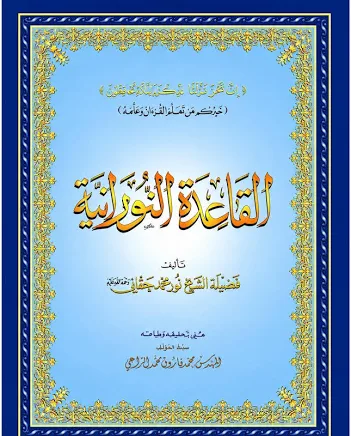
Building Strong Arabic Literacy Through the Qaida Noorania Curriculum
Our Educational Philosophy
Every child deserves to understand the language they are learning—not simply memorize it.
At our Quran School, we believe that children growing up in Sweden face a unique educational challenge. While they are immersed in Swedish at school and in society, Arabic is often limited to the home or the mosque. Without a structured literacy program, many children can memorize portions of the Qur’an but struggle to read new Arabic words independently, write correctly, or understand the structure of the language.
For this reason, our curriculum is built around Qaida Noorania, a proven method that develops strong foundations in Arabic reading, pronunciation, writing, and comprehension before moving into advanced Quranic studies.
Our objective is not only to help children recite the Qur’an beautifully but also to give them the lifelong ability to read, write, and engage confidently with the Arabic language.
Why Qaida Noorania?
Qaida Noorania is one of the most effective educational systems for teaching Arabic phonics and Quranic reading. It introduces children to the Arabic alphabet in a gradual, logical sequence that develops accurate pronunciation (Makharij), fluency, and reading confidence.
Rather than asking children to memorize large portions of the Qur’an before mastering reading, Qaida Noorania teaches them how to decode Arabic words independently.
This creates learners who are capable of reading any Quranic text instead of relying only on memory.
The benefits include:
- Strong Arabic phonics
- Correct pronunciation of every letter
- Reading fluency
- Writing skills
- Better listening skills
- Improved concentration
- Greater confidence in learning Arabic
Why Arabic Literacy Matters for Children Growing Up in Sweden
Children raised in Sweden become fluent readers and writers in Swedish because they receive systematic instruction throughout their school years.
Arabic deserves the same educational approach.
Many Muslim children attend Quran classes only a few hours each week. If those limited hours are devoted entirely to memorization, children may successfully memorize chapters while still finding it difficult to read unfamiliar Arabic words or write simple Arabic sentences.
Our goal is different.
We want every child to develop genuine Arabic literacy—the ability to:
- Recognize letters instantly
- Read accurately
- Understand reading rules
- Write Arabic correctly
- Become independent readers
These skills provide a much stronger foundation for lifelong Quranic learning.
Why We Prioritize Reading Before Memorization
Many Quran programs begin by assigning memorization from an early age.
Our school takes a different educational approach.
We believe that before children memorize large portions of the Qur’an, they should first become confident readers.
When children first learn how Arabic letters connect, how vowels work, how words are formed, and how Quranic reading rules function, memorization becomes easier, more accurate, and more meaningful.
This approach also helps children:
- Recognize letters instantly
- Read accurately
- Understand reading rules
- Write Arabic correctly
- Become independent readers
Memorization remains an important goal in Islamic education, but we believe it is most beneficial when built upon strong reading skills rather than replacing them.
Our Three-Phase Learning Program
Our curriculum follows a carefully structured progression that develops literacy step by step.
Phase 1 – Foundation Phase
The Foundation Phase introduces children to the building blocks of Arabic.
Students learn:
- Arabic alphabet recognition
- Letter names and sounds
- Correct pronunciation (Makharij)
- Short vowels (Harakat)
- Long vowels (Madd)
- Letter formation
- Beginning Arabic writing
- Reading simple words
This stage develops confidence and prepares students for fluent reading.
Phase 2 – Intermediate Phase
Once students master the basics, they begin reading connected Arabic text with increasing fluency.
Students study:
- Joined letters
- Reading full words
- Sukoon
- Shaddah
- Tanween
- Basic Tajweed rules
- Sentence reading
- Copy writing
- Dictation exercises
Students also continue strengthening handwriting and spelling while improving reading speed and accuracy.
Phase 3 – Advanced Phase
At this level students become independent readers of the Qur'an.
They continue developing:
- Advanced Tajweed
- Fluent Quran reading
- Arabic grammar foundations
- Vocabulary development
- Reading comprehension
- Writing paragraphs
- Dictation
- Quran study with understanding
Only after students have established strong reading skills do they progress toward larger memorization goals according to their individual ability and readiness.
Developing More Than Reading Skills
Our curriculum is designed to nurture the whole child.
Learning Arabic develops many transferable skills that support success both in Islamic studies and mainstream education.
Students improve:
- Concentration
- Memory
- Listening skills
- Visual recognition
- Fine motor skills through handwriting
- Confidence
- Discipline
- Independent learning
Because Arabic uses a different alphabet and writing system from Swedish, mastering it also strengthens cognitive flexibility and language awareness.
Preparing Children for a Lifetime of Learning
Our vision is not simply to help children complete a course.
We aim to equip them with the skills they will use throughout their lives.
A child who can confidently read Arabic will always be able to return to the Qur’an, continue learning independently, and deepen their understanding of Islam.
Memorization is a valuable achievement, but literacy is a lifelong skill.
When children first learn how to read accurately, write confidently, and understand the structure of Arabic, every future stage of Quranic learning becomes stronger and more meaningful.
That is why our Quran School is committed to a structured, literacy-based curriculum built on Qaida Noorania—helping children in Sweden become confident readers, capable writers, and lifelong learners of the Qur’an
Service
- Quran Learning
- Funeral Service
- Mosque Development
- Counselling
- Cultural Party
Useful Links
Contact
- Dar Al Nur, Sorögatan 25 , 164 41 Kista
- 0707591019, 0736969212
- daralnurforening@gmail.com